Niche Perfume Brands Are Capturing Chinese Shoppers with Scents That Create a ‘Persona’
For Chinese shoppers, olfactory experiences that create a persona for the user or express wealth can be some of the factors behind buying a perfume, according to DSM-Firmenich's Luc Berriet.

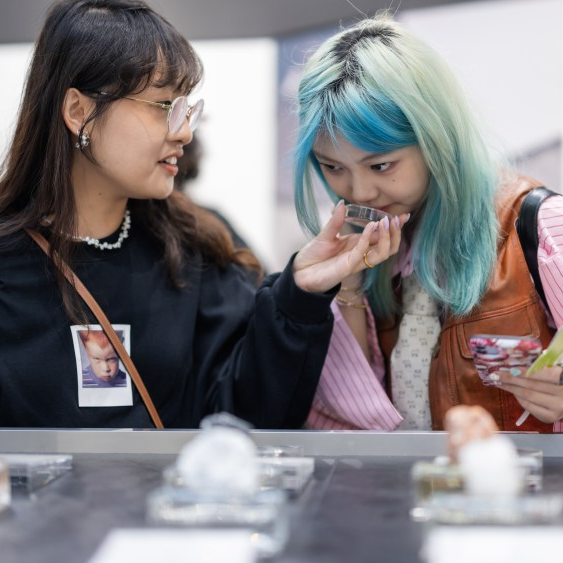
Young shoppers visiting Notes Shanghai, a perfume fair launched in Shanghai this April.
Niche perfumes, or what Chinese shoppers refer to as “salon scents,” are having a moment as younger consumers look to stand out from the crowd.
Even though global players such as Chanel, Dior and Hermès still dominate the market, niche perfume brands such as Documents and To Summer have captured a new crop of shoppers who crave scents that reflect Chinese traditional culture, which is in sync with fashion trends like New Chinese style.
“Finding the perfume which would make you empowered at work or being a very strong seductive person or expressing wealth or [being] perceived as a cute friend, or this unique concept of cold seduction, are a few of the rationales behind buying a perfume,” said Luc Berriet, senior fine fragrance development director in Asia for DSM-Firmenich, who has spent more than 10 years in Asia. As the world’s largest fragrance, beauty, well-being and nutrition supplier, DSM-Firmenich established Villa Harmony, a local research firm in 2023 to explore home-grown perfumery ingredients, one of the first in the market.
“The younger generation of consumers are more courageous and constantly want to try new things, so the pressure is on for mainstream brands,” observed Yue Wu, founder of Notes Shanghai, a biannual perfume fair that made its debut this April.
With a background in the fragrance supply chain, Wu is also the cofounder of the Golden Osmanthus Awards, the first fragrance competition focused on promoting Chinese fragrance brands, backed by the China Household Chemicals Industry Association.
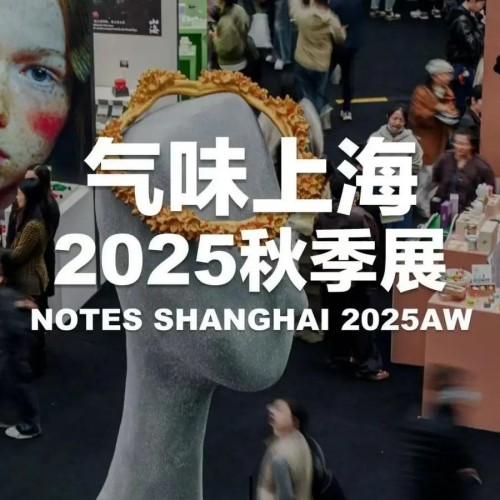
The four-day fair, which attracted more than 11,000 visitors, was partially inspired by Milan’s Esxence fair, according to Wu.
“We want to promote artistry fragrance brands and break down information gaps for brands that look to enter the Chinese market,” he added.
“Chinese consumers are actually not very good at distinguishing between niche perfume, salon perfume or mainstream perfumes, because this market has leapfrogged and has skipped a lot of perfume history,” added Wu.
For investor Isabella Wang of Citic Capital, a Chinese investment fund, the market is still in its nascent phase of growth. A cooling investment market coupled with prudent shoppers meant that brands that can stay on top has to be “highly differentiated.”
“Financial investors are willing to bet on high-quality assets with big bucks rather than cast a wide net, which was the case a few years ago, while strategic investors, such as L’Oréal and Estée Lauder, are looking to round out their brand matrix with these Chinese aesthetic-related brands,” said Wang. “The takeaway is that the local market infrastructure will soon catch up to the global market, which means that a highly differentiated local player can one day have a place on the global market,” said Wang.
For Lau, successful brands are the ones that jump on new retail trends. “The market is coming back from 2023’s slumber — some of it I would contribute to new channels such as influencer livestreaming, but primarily through luxe content building and retail storytelling,” said Lau.
On the product development front, Berriet said brands have so much to play with, as the Chinese market tends to defy conventional wisdom.
According to a recent blind test conducted by Berriet, the Chinese male consumer preferred scents that were all traditionally feminine perfumes, which could pose a tricky issue for prestige brands looking to launch in China. “Local brands are more into genderless scents which cater to male and female consumers,” added Berriet.
“Sometimes, a trend in lifestyle, beauty, bars, and restaurants can influence the fragrance industry, either in the creation or in new storytelling. It is fascinating the freedom and creativity you are allowing the perfumers to have on Chinese projects. This permanent search for creativity and new trends is exciting,” added Berriet.